
Your Child's First Dental Visit: What to Expect & How to Prepare
Your Child's First Dental Visit: What to Expect & How to Prepare
There's something special about firsts — the first smile, the first step, the first word. Your child's first dental visit deserves the same gentle attention.
For many parents in Dubai, this milestone can feel a little daunting: Will my toddler cooperate? Will they cry? Am I even doing this at the right age?
At Nava Dental Clinic, our goal is to make that first appointment feel calm, positive and reassuring for both you and your child.
Why Early Dental Visits Matter
Early dental visits are not about intensive treatment. They are about prevention, monitoring development and helping your child become comfortable with dental care from a young age.
A common recommendation is for children to have their first dental visit by their first birthday or within around six months of their first tooth appearing.
Monitor Tooth Eruption
Your pediatric dentist can check how your child's teeth are erupting and whether spacing and development appear appropriate.
Spot Early Signs of Decay
Early visits can identify signs of tooth decay before they become more significant, including decay associated with frequent night-time feeding or bottle use.
Assess Oral Habits
Habits such as thumb-sucking or prolonged pacifier use can be discussed and monitored as your child grows.
Monitor Jaw & Bite Development
Early check-ups provide an opportunity to observe jaw growth, bite development and the way the teeth are coming together.
Starting early also helps normalise the dental chair. A child who becomes familiar with dental visits from a young age may feel more comfortable and confident during future appointments.
What Happens During a Child's First Checkup at Nava?
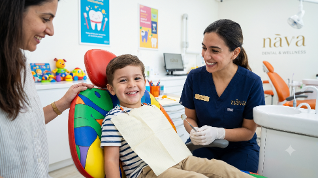
First visits are intentionally gentle, short and low-pressure. The main objective is to introduce your child to the dental environment and begin building trust.
A Warm Welcome
Your child is given time to become familiar with the environment, meet the dental team and settle in before anything clinical begins.
A Gentle Visual Examination
The pediatric dentist checks the teeth, gums and jaw alignment. Younger children may be examined while sitting comfortably on a parent's lap.
A Conversation With Parents
Your dentist will discuss feeding habits, teething, brushing routines, oral habits and any concerns you may have about your child's dental development.
Practical Guidance
You will receive simple advice on brushing technique, fluoride use where appropriate, diet and ways to support healthy teeth at home.
A Positive Send-Off
The appointment ends on a positive note so your child begins to associate dental visits with a friendly and reassuring experience.
For most first visits, there is no drilling, no injections and no pressure. The goal is simple: build trust.
Will It Hurt? Will My Child Be Scared?
Will It Hurt?
A routine first visit is primarily an examination and introduction to dental care.
Unless an urgent problem is identified, treatment is generally not the focus of the appointment.
Will My Child Be Scared?
Every child responds differently. Some children are immediately curious, while others need more time to become comfortable.
A child-focused dental approach uses age-appropriate language and allows the appointment to progress at a pace suited to the child.
Parents also play an important role. Children can pick up on anxiety, so presenting the visit as something positive and ordinary can make the experience easier.
What Is Myobrace and Why Does It Matter for Kids?
As children grow, parents may begin hearing about Myobrace, particularly when there are concerns such as crowding, mouth breathing or prolonged thumb-sucking.
Myobrace is a pre-orthodontic treatment system commonly used during childhood to address oral habits and muscle function that may contribute to poor dental development.
Mouth Breathing
Myobrace may be used as part of a treatment approach aimed at encouraging healthier oral and breathing habits.
Poor Tongue Posture
Tongue position can influence dental and jaw development, particularly during childhood.
Thumb or Pacifier Habits
Prolonged sucking habits can influence bite development and may need monitoring or early intervention.
Oral Muscle Function
Myobrace treatment may also focus on improving oral muscle habits that influence dental development.
The system uses removable appliances worn according to your dentist's instructions, often for part of the day and overnight.
Your dental team can assess whether your child's development or oral habits suggest that Myobrace may be beneficial.
Signs Parents Should Watch Between Dental Visits
Parents are often the first to notice small changes between routine dental appointments.
If you notice any of these changes, you do not necessarily need to wait for the next routine appointment before contacting your child's dental team.
How Nava Creates a Calming Dental Experience for Kids
A child's early dental experiences can shape how they feel about oral health and dental appointments for many years.
Child-Specific Communication
Simple, friendly explanations are used instead of complicated clinical language so children understand what is happening.
No Rushing
Giving children time to settle in helps reduce pressure and allows the appointment to progress more comfortably.
A Warm Environment
A welcoming dental environment can make the experience feel more familiar and less intimidating for young patients.
Consistency
Seeing familiar team members can help children gradually build trust and confidence during repeated visits.
Parent Involvement
Parents can remain involved and close by, particularly during appointments for toddlers and younger children.
Whether your child needs a routine dental check-up, an assessment for Myobrace or simply their very first appointment, the goal is to create a positive relationship with dental care.
Frequently Asked Questions
At what age should my child have their first dental visit?
A common recommendation is for the first dental visit to take place by the first birthday or within around six months of the first tooth appearing.
Early visits focus on prevention, development and helping your child become comfortable with dental care.
How often should my child see a pediatric dentist?
Many children attend routine dental appointments approximately every six months, although your dentist may recommend a different schedule based on your child's individual dental needs.
Is Myobrace a replacement for braces?
Not necessarily. Myobrace focuses on oral habits and muscle function that can influence dental development.
Some children may still require orthodontic treatment such as braces later, depending on how their teeth and jaws develop.
My child is scared of the dentist. What can I do?
Consider beginning with a simple introductory appointment, use positive language at home and allow the dental team to progress at a pace that keeps your child comfortable.
Does thumb-sucking affect my child's teeth?
Prolonged thumb-sucking can influence bite and palate development, particularly when the habit continues as a child grows.
Your pediatric dentist can monitor the habit and advise whether any intervention is needed.
Make Their First Dental Visit a Positive One
Every child deserves a dental experience built on patience, warmth and trust. That first appointment can set the tone for how they feel about dental care for years to come.
If it is time for your child's first check-up — or it has simply been a while since their last visit — our pediatric dental team at Nava Dental Clinic is here to help.
Book Your Child's First Dental Appointment
Give their smile the healthiest possible start.