
10 Signs Your Gums Are Trying to Tell You Something
10 Signs Your Gums Are Trying to Tell You Something
10 Signs Your Gums Are Trying to Tell You Something
Your gums are constantly giving you clues about your oral health. Learning to recognize those signs early can make treatment simpler, more comfortable, and far more effective.
Your Gums Are Talking — Are You Listening?
We spend a lot of time thinking about our teeth — their whiteness, their straightness, the occasional cavity. But there's a quieter, often overlooked hero of your oral health working behind the scenes: your gums.
Healthy gums don't just frame your smile — they're the foundation that holds everything together, literally.
And when something's off, your gums are usually the first to try and tell you.
The challenge is that these early signals are easy to dismiss: a little blood while brushing, slightly puffy gums, or a bit of bad breath.
On their own, they may seem minor. Together, they can be your body's way of flagging early gum disease — something incredibly common, and thankfully, very treatable when caught early.
If you're in Dubai or anywhere across the UAE and have noticed any of the signs below, this guide will help you understand what's really going on — and what to do next.
Why Gum Health Is the Foundation of Overall Oral Health
Think of your gums as the soil, and your teeth as the plants.
No matter how strong or well-cared-for your teeth are, if the "soil" beneath them is unhealthy, everything eventually becomes unstable.
Gums support the bone structure that holds your teeth in place, protect the roots from bacteria, and act as an early warning system for issues developing beneath the surface.
Unfortunately, gum disease is also one of the most common — and most under-diagnosed — dental issues among adults.
Many people live with mild to moderate gum disease for years without realizing it, simply because the symptoms develop slowly and are easy to brush off.
Let's walk through the ten signs worth paying attention to.
10 Warning Signs Your Gums May Be Trying to Tell You Something
Bleeding Gums When Brushing or Flossing
This is the most common — and most commonly ignored — early sign.
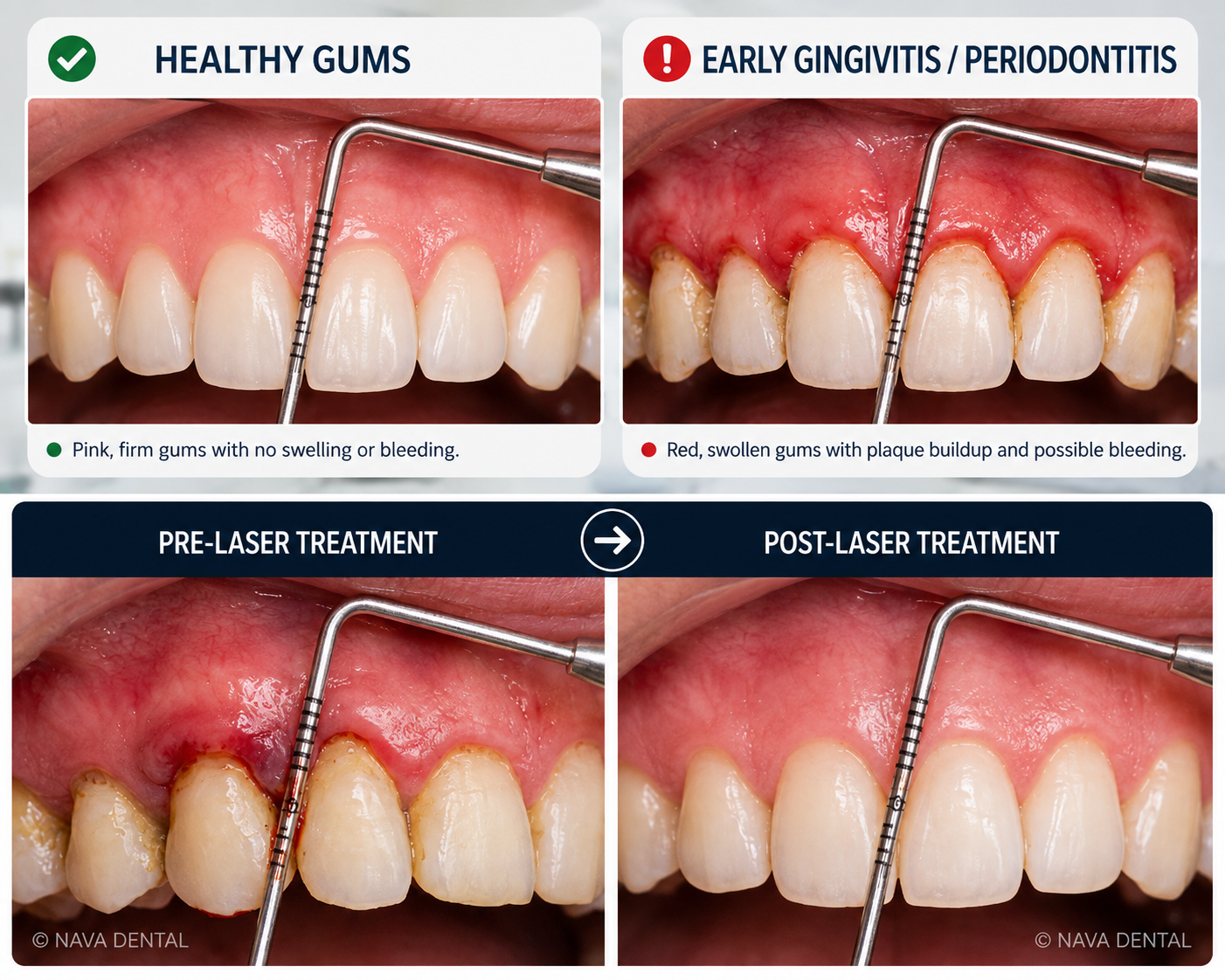
Healthy gums should not bleed during normal brushing or flossing. If yours do, even occasionally, it's often one of the earliest indicators of gum inflammation, also known as gingivitis.
Redness or Swelling Along the Gumline
Healthy gums are typically light pink and firm.
Redness, puffiness, or a shiny appearance along the gumline usually signals inflammation caused by bacterial buildup.
Persistent Bad Breath
Occasional bad breath after garlic-heavy meals is normal.
Persistent bad breath, even after brushing, can be linked to bacteria beneath the gumline that regular brushing can't reach.
Gum Recession
If your teeth seem to be getting "longer" over time, it's likely your gums are receding.
Recession exposes more of the tooth root and can also lead to increased sensitivity.
Tooth Sensitivity
Sudden sensitivity to hot, cold, or sweet foods can be a sign that receding gums have exposed sensitive areas of the tooth that are not designed to be uncovered.
Loose or Shifting Teeth
As gum disease progresses, it can affect the bone structure supporting your teeth.
This may lead to slight movement or shifting — something that should never be ignored.
Pus or Discharge Around the Gums
Pus or discharge is a clearer sign of infection and typically indicates a more advanced stage of gum disease requiring prompt attention.
Pain While Chewing
Discomfort while eating, especially around specific teeth, can point to inflammation or infection affecting the supporting gum and bone tissue.
A Change in Your Bite
If your teeth suddenly feel like they're fitting together differently, this can be linked to shifting teeth caused by underlying gum and bone changes.
Gums That Feel Tender to the Touch
Gums that feel sensitive or sore, even without visible swelling, can indicate inflammation that hasn't yet become visually obvious.
If any of these signs sound familiar, don't ignore them. The earlier gum issues are addressed, the simpler and more comfortable treatment tends to be.
What Is Periodontal Disease and How Does It Progress?
"Periodontal disease" is the umbrella term for gum disease, and it typically develops in stages.
Gingivitis
This is the earliest, mildest stage — inflammation of the gums caused by plaque buildup along the gumline.
At this point, damage is usually still reversible with proper cleaning and improved oral hygiene.
Early Periodontitis
If gingivitis is left untreated, bacteria begin affecting the bone and tissue supporting the teeth.
Small pockets can form between the teeth and gums, trapping more bacteria.
Moderate Periodontitis
Bone loss becomes more noticeable, gum pockets deepen, and symptoms such as bad breath, gum recession, and sensitivity become more pronounced.
Advanced Periodontitis
At this stage, significant bone and tissue damage may lead to loose teeth or even tooth loss without intervention.
The encouraging part? Gingivitis is fully reversible, and even early-to-moderate periodontitis can be effectively managed with the right professional treatment and home care routine.
What Is Laser Gum Treatment and Why It's Less Painful
If treatment is needed, many patients are relieved to learn how far gum disease treatment has come — particularly with laser gum therapy, now widely used across modern clinics in the UAE.
What Laser Treatment Does
- Removes infected or inflamed gum tissue with precision
- Targets bacteria beneath the gumline
- Promotes faster healing compared to traditional surgical methods
Why Patients Prefer It
- Minimal bleeding during the procedure
- Reduced discomfort compared to traditional gum surgery
- Shorter recovery time
- Lower risk of infection due to the sterilizing effect of the laser
For many patients, laser gum treatment has genuinely changed the experience of gum therapy from something intimidating into something far more manageable.
Deep Scaling vs. Regular Cleaning — What's the Difference?
This is a question we hear often, and the distinction matters.
Regular Cleaning (Prophylaxis)
This is your standard six-month cleaning, focused on removing plaque and tartar from the surface of the teeth and just above the gumline.
It's preventive, quick, and suitable for healthy gums.
Deep Scaling (Scaling and Root Planing)
This is a more thorough treatment used when gum disease is already present.
- Scaling: Removing plaque and tartar from below the gumline, along the tooth root
- Root planing: Smoothing the tooth root to help gums reattach and heal properly
Deep scaling is typically done in sections, sometimes with local anesthesia for comfort, and is a critical step in halting the progression of periodontitis.
If you're unsure which one you need, that's completely normal — it's exactly what a proper gum assessment is for.
When to See a Periodontist
While your general dentist can manage early-stage gum concerns, certain signs call for a specialist's care.
A periodontist specializes specifically in the gums and supporting bone structure, offering more advanced diagnostic tools and treatment options for moderate to severe cases.
Frequently Asked Questions
Is it normal for gums to bleed a little when brushing?
No. While common, bleeding gums are not normal and are usually one of the earliest signs of gum inflammation that deserves attention.
Can gum disease be reversed?
Gingivitis, the earliest stage, is fully reversible with proper cleaning and care.
More advanced periodontitis can be managed and controlled, though some damage may not be fully reversible.
Is laser gum treatment painful?
Most patients experience significantly less discomfort with laser treatment compared to traditional methods, along with a shorter recovery period.
How often should I get a deep cleaning?
This depends on your gum health. Some patients need it once, while others benefit from periodic maintenance cleanings every 3–4 months as advised by their dentist.
Can stress affect gum health?
Yes. Stress can weaken your immune response, making it harder for your body to fight off the bacteria that cause gum inflammation.
Your Gums Deserve Attention Too
Your gums are constantly communicating with you — sometimes subtly, sometimes not so subtly.
Listening early means simpler treatment, more comfort, and long-term protection for both your smile and your overall health.
If you've noticed any of these signs, or it's simply been a while since your last checkup, our team in Dubai is here to help you understand exactly what your gums are telling you — and what to do about it.
Give your smile the foundation it deserves.